
How to apply perfume
A few small choices about where and how much to spray change how a perfume wears all day.
Disclosure: We may earn a commission if you buy through links on this page. It does not change what we recommend. Affiliate Disclosure
Where to apply
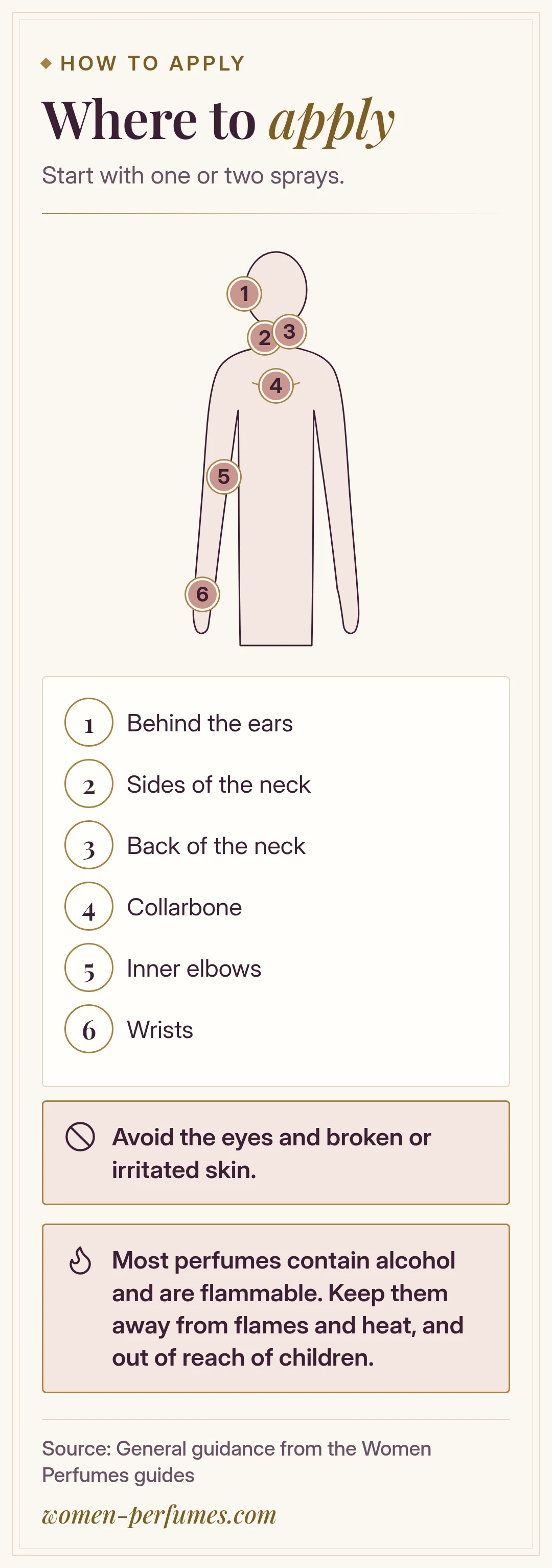
Pulse points are the traditional spots because they are warm and often uncovered: wrists, the sides of the neck, behind the ears, inner elbows. Warmth helps a scent rise. Other options:
- The back of the neck, under hair, for a softer trail.
- The chest or collarbone, under clothing, for something more private.
- Clothes, held at a distance, after testing a hidden spot.
Avoid spraying near your eyes or onto broken or irritated skin.
How much to use
Start with one or two sprays, then adjust over a few days. Concentration matters: you may want less of a parfum or EDP than of a light EDT or cologne. In shared indoor spaces, less is usually kinder.
Spray, oil, or solid
Spray.
Alcohol based. Spreads easily and lifts the top notes.
Oil.
Applied by roller or dab. Often sits closer to the skin.
Solid.
A balm you rub in with a fingertip. Convenient for travel and touchups.
When to apply
Apply after showering and before dressing, so the perfume settles on skin first and you can avoid marking fabric. Give it a moment to dry before putting on jewelry or silk.
Safety at home
Most perfumes contain alcohol and are flammable. Keep them away from flames and heat, and out of reach of children.
Some people with asthma, migraine, or scent sensitivity react to fragrance. If you are pregnant or have a medical condition, ask your doctor before using a new product.
FAQ
General information, not medical advice. Patch test new fragrances and stop use if irritation occurs. See a doctor about skin reactions or breathing concerns.
Try layering
Two scents can make something new. Here is how to do it well.
