
Eau de parfum vs eau de toilette
What the strength names on a bottle usually mean, and why they are a guide, not a guarantee.
Disclosure: We may earn a commission if you buy through links on this page. It does not change what we recommend. Affiliate Disclosure
What concentration means
A perfume is a blend of fragrance materials dissolved in a carrier, usually alcohol. The concentration is the share of the blend that is fragrance oil. Higher concentration usually means a scent that lasts longer on skin, though it does not always mean a louder one.
Typical ranges
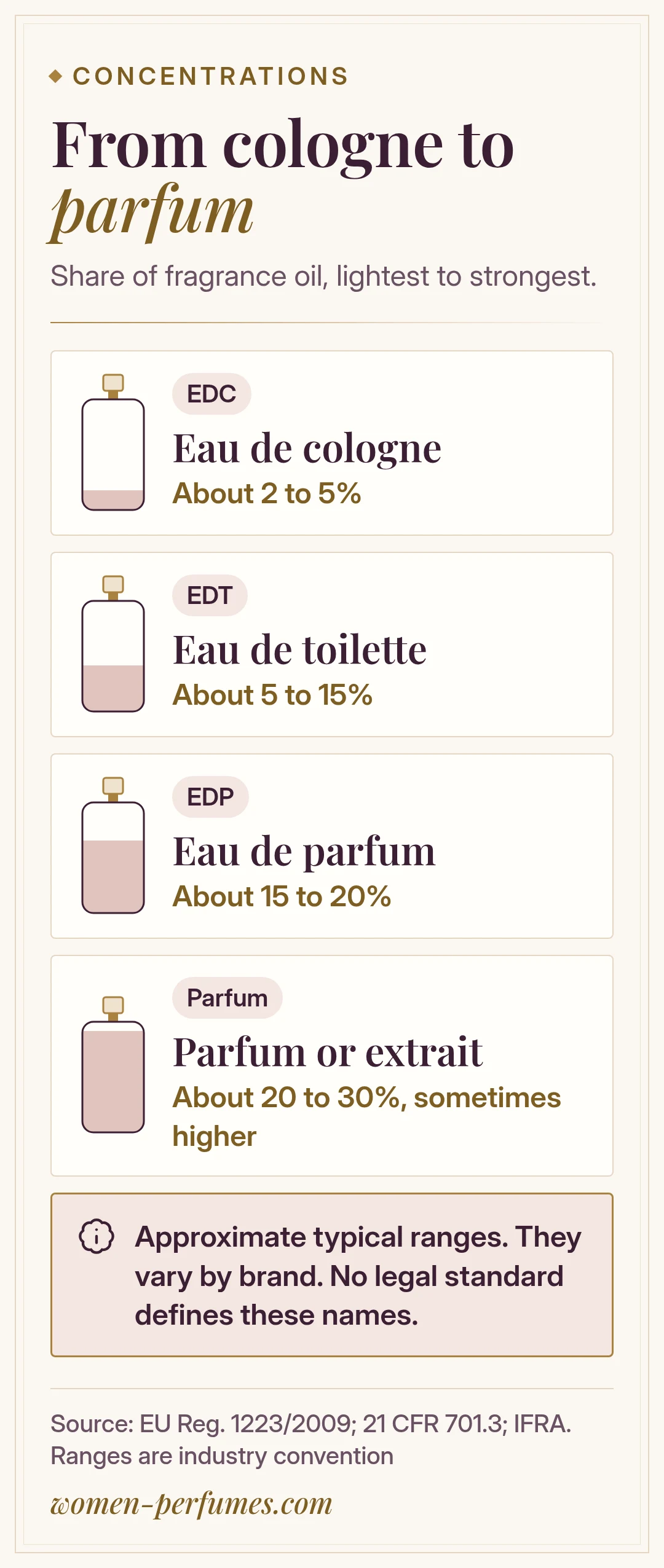
The names below are trade conventions. There is no legal standard for them in the US or the EU. The ranges below are approximate figures often quoted in the industry, and they vary by brand:
| Name | Short form | Typical fragrance oil | How it tends to wear |
|---|---|---|---|
| Parfum or extrait de parfum | Parfum | About 20 to 30%, sometimes higher | Longest lasting, often closer to the skin |
| Eau de parfum | EDP | About 15 to 20% | Long lasting, a common default today |
| Eau de toilette | EDT | About 5 to 15% | Lighter, brighter, fades sooner |
| Eau de cologne | EDC | About 2 to 5% | Light and short lived, often citrus |
| Body mist or eau fraîche | None | Usually lower still | A soft veil, reapplied often |
Why the ranges overlap
There is no law in the US or the EU that defines these names or sets a percentage. IFRA, the fragrance industry's standards body, regulates the safety of ingredients, not the strength of the finished product. Each brand decides what to call its own formulas, so one brand's EDT can be close to another brand's EDP.
Same name, different perfume
When a brand releases the same perfume as an EDT and an EDP, they are often different formulas, not just stronger and weaker versions. The EDP may have more of the heart and base notes, and the EDT may be brighter at the top. If you love one, test the other before assuming you will love it too.
Words with no fixed meaning
"Intense", "elixir", "absolu", and "le parfum" are naming choices. They usually suggest a richer version, but they have no agreed strength. Read the notes and test it.
FAQ
Related guides
General information, not medical advice. Patch test new fragrances and stop use if irritation occurs. See a doctor about skin reactions or breathing concerns.
Make it last
Strength is only one part of longevity. See what else matters.
