
Perfume notes, explained
Why a perfume smells different later in the day, and how to read a notes list before you try it.
Disclosure: We may earn a commission if you buy through links on this page. It does not change what we recommend. Affiliate Disclosure
What a note is
A note is a smell you can pick out in a perfume, named after something familiar: bergamot, rose, vanilla. A note is a description. A "strawberry note" may come from no strawberries at all, just materials that together smell like strawberry.
The notes pyramid
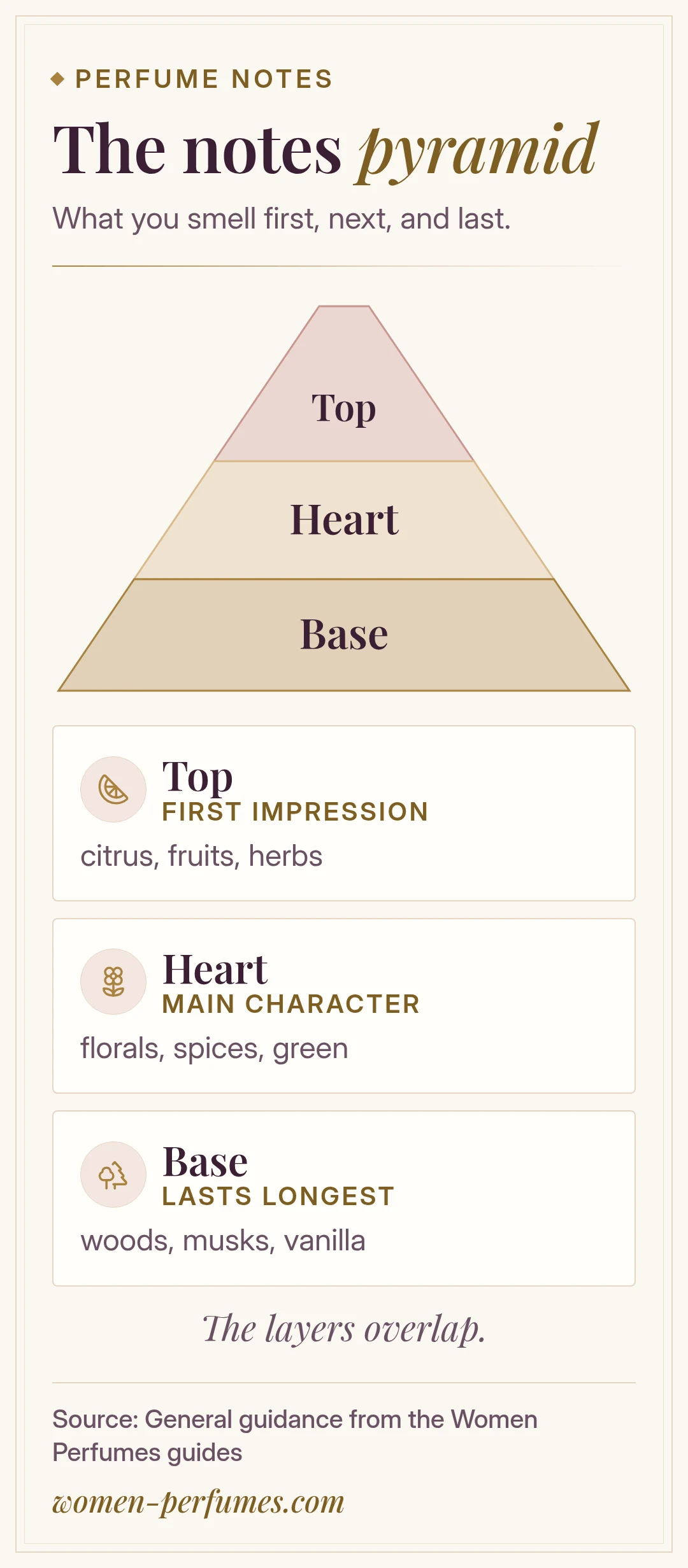
Perfumes are often described as a pyramid of three layers, based on how quickly each material evaporates.
Top notes. The first impression. Light, quick to evaporate materials such as citrus, light fruits, and some herbs. They are usually most noticeable in the first several minutes.
Heart (middle) notes. The main character, which appears as the top fades. Often florals, spices, and green notes.
Base notes. The foundation that lingers longest. Heavier, slower materials such as woods, musks, resins, vanilla, and amber.
The layers overlap. They are not three separate scents taking turns.
Why this matters when you test
Because the top notes fade first, the smell from a fresh spray is not the smell you will live with. Judge a perfume after it has dried down on skin for a while, not from the first sniff.
Linear perfumes
Some modern perfumes are built to smell much the same from start to finish. Their descriptions may list a few notes with no pyramid. Neither style is better.
Reading a notes list
- Look for notes you already know you like or dislike.
- Notice where they sit. A note you dislike in the top may pass quickly. In the base, it will stay.
- Treat the list as a rough map. It rarely names every material.
FAQ
Related guides
General information, not medical advice. Patch test new fragrances and stop use if irritation occurs. See a doctor about skin reactions or breathing concerns.
Put it into practice
Now that you know about dry down, learn how to test a perfume properly.
